here’s something quietly extraordinary about a pool that looks like it belongs on the cover of an architecture magazine — and almost always, the secret is the fence surrounding it. A luxury pool fence isn’t just a safety barrier; it’s a design statement that sets the tone for your entire outdoor living space. Whether you’re building a new pool or upgrading an existing one, the right fencing transforms a backyard into a private resort.
Most homeowners underestimate the impact of pool fencing on the overall aesthetic of their property. A clunky chain-link fence or a dated wrought iron rail can undermine even the most thoughtfully landscaped garden. On the other hand, a well-chosen luxury pool fence — crafted from premium materials with precision engineering — elevates everything around it. It makes the water shimmer more, the greenery pop harder, and the whole outdoor space feel intentional.
This guide is for those who refuse to compromise on beauty or safety. If you’re ready to invest in fencing that reflects the same level of care you’ve put into your home, you’re in the right place. From frameless glass panels to brushed stainless steel cables, we’ll walk through every option worth considering, the questions you need to ask before buying, and what separates good pool fencing from genuinely great luxury pool fencing.
Why Pool Fencing Is More Than a Legal Requirement
Before we get into the aesthetics, let’s acknowledge the obvious: pool fencing is mandatory in most jurisdictions around the world. In Australia, the UK, the US, and across Europe, regulations require fences of a specific height and gate specifications to prevent unsupervised child access to pool areas. But meeting the legal minimum is the floor — not the ceiling.
The best luxury pool fences are engineered to exceed safety standards while looking nothing like what you’d typically associate with pool barriers. They’re designed by architects and landscape designers as part of a cohesive vision. They’re fabricated with materials that weather gracefully over decades. They become a feature of the home, not a requirement slapped on at the end.
Safety and beauty are not competing priorities here. When you invest in high-quality pool fencing, you’re actually getting both — structural integrity that outlasts cheaper alternatives, and aesthetics that add measurable property value.
The Most Popular Luxury Pool Fence Materials
The material you choose will define the look, feel, maintenance demands, and longevity of your pool fence. Here’s a breakdown of the options that genuinely qualify as luxury-grade.
Frameless Glass Pool Fencing
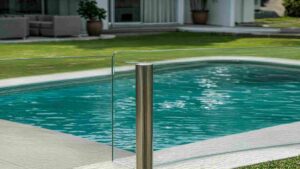
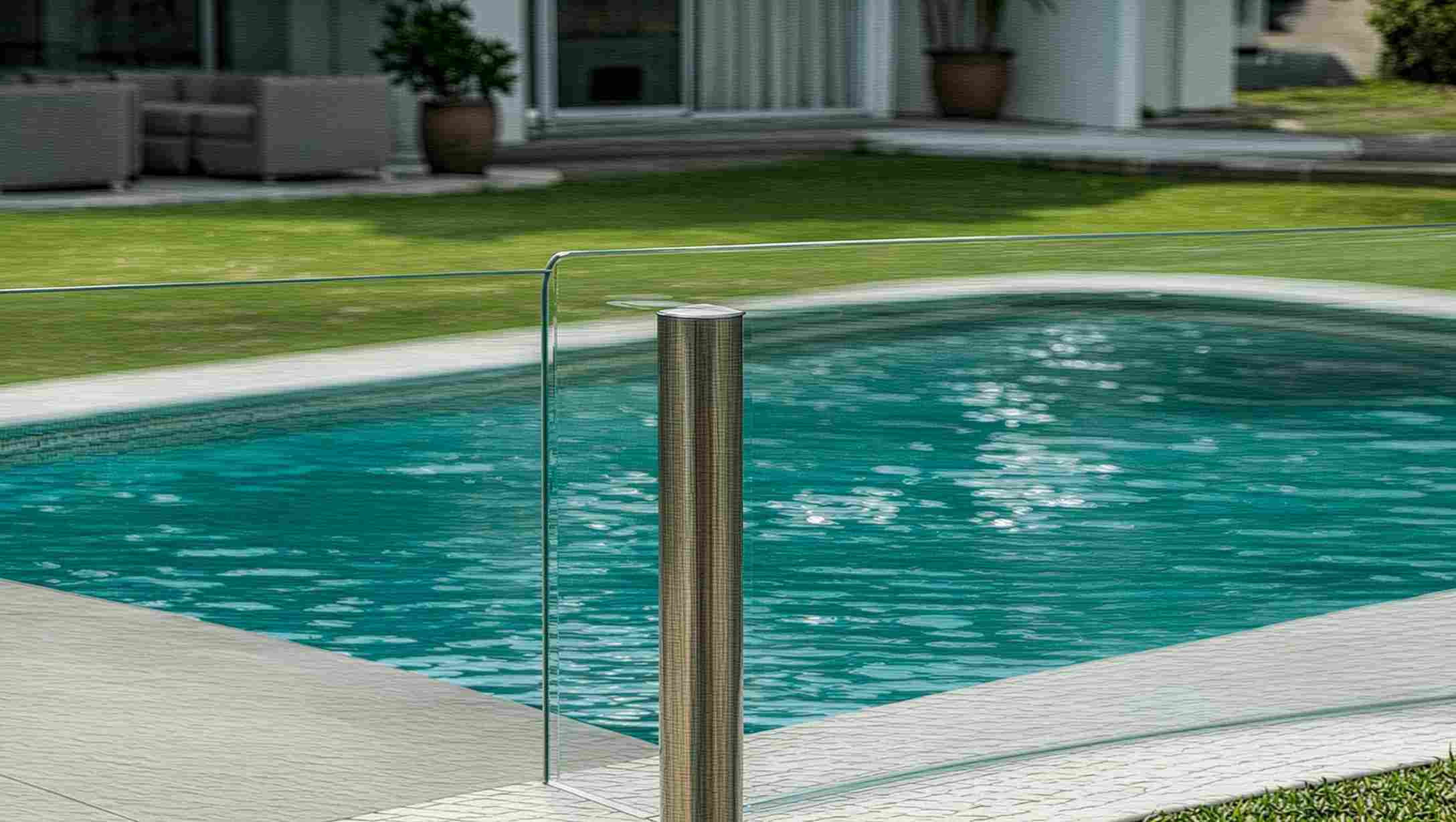
Nothing disappears more elegantly than glass. Frameless glass pool fencing uses thick, toughened tempered glass panels — typically 12mm to 19mm — held in place by polished stainless steel spigots or channel systems embedded in the ground or decking. The result is a virtually invisible barrier that lets the landscape flow uninterrupted.
This is the go-to choice for infinity pools, ocean-view properties, and contemporary homes where the priority is preserving sightlines. Frameless glass also pairs beautifully with minimalist outdoor furniture and geometric pool shapes. Maintenance requires regular cleaning to keep it streak-free, but the structural upkeep is minimal since there’s no paint to peel or metal to corrode.
One important consideration: glass fencing can get hot in direct sunlight, and the spigots need to be installed by certified professionals to meet safety loading requirements. Always insist on AS 1288 or EN 12150 compliant glass from a reputable supplier.
![Frameless glass pool fence surrounding a modern infinity pool with ocean views]
Semi-Frameless Glass Pool Fencing
For those who love the look of glass but want a more economical or structurally defined option, semi-frameless glass pool fencing uses aluminium or stainless steel posts between panels. The posts can be powder-coated in virtually any colour — matte black being the current favourite — which adds a sharp, graphic quality to the fence line.
Semi-frameless designs allow for longer panel spans and are often easier to install on uneven terrain. They also hold up better in high-wind areas since the posts provide additional structural support. From a design standpoint, the visible posts can actually become a feature, especially when matched to other hardware elements like pergola posts or outdoor lighting fixtures.
Stainless Steel Cable and Wire Fencing
Marine-grade stainless steel cable fencing is the preferred choice for coastal and contemporary properties. Horizontal cables are tensioned between posts, creating a fence that’s nearly invisible from a distance while meeting all safety requirements. It pairs exceptionally well with natural timber posts, giving a warm, nautical character that feels relaxed yet refined.
Cable fencing requires periodic tensioning as the cables can loosen over time, and in coastal environments, the quality of the steel matters enormously. Grade 316 stainless steel is the minimum you should consider near saltwater. Cheaper alternatives can develop surface rust within a few years — which is both unsightly and potentially dangerous.
Powder-Coated Aluminium Pool Fencing
Aluminium has undergone something of a renaissance in the luxury pool fencing market. Modern aluminium fencing systems are precision-engineered with clean lines, slimmer profiles, and a wide palette of powder-coat finishes — from satin black and charcoal to champagne bronze and sage green.
High-end aluminium pool fencing isn’t the tubular steel picket you’re imagining. Think flat-bar panels with architectural spacing, blade-style fins that shift privacy levels with the angle of view, or laser-cut decorative screens that cast shadow patterns on the pool deck. Aluminium won’t rust, is lightweight, and is surprisingly robust when properly engineered.
Wrought Iron and Steel Pool Fencing
Traditional wrought iron fencing still has a place in luxury pool design — particularly on heritage homes, Hamptons-style estates, and formal garden settings. Modern steel pool fencing takes the best of that classic silhouette and refines it: thinner profiles, welded rather than cast joints, and galvanised or powder-coated finishes that stand up to pool chemicals and moisture.
A wrought iron or steel fence with custom ornamental detailing — spear tops, scrollwork, or bespoke panel designs — can be a genuinely stunning architectural element. It signals permanence and craftsmanship in a way that lighter materials simply can’t.
![Powder-coated black aluminium pool fence with horizontal slats beside a resort-style pool]
Luxury Pool Fence Design Styles to Consider
Beyond materials, the design language of your pool fence should align with your home’s architecture and garden style. Here are the design directions that define the high end of the market.
Minimalist and Contemporary
Defined by clean lines, neutral colours, and an absence of ornamentation. Frameless glass, thin-profile aluminium, and stainless cable systems all live in this category. The goal is for the fence to disappear visually, letting the pool and landscaping take centre stage.
Coastal and Hamptons
Natural timber posts with stainless cable infill, or white-painted picket fencing with generous spacing. This style feels relaxed and breezy, evoking the feel of a luxury beach house. It pairs well with weathered teak furniture, linen cushions, and native plantings around the pool perimeter.
Industrial and Urban
Matte black powder-coated steel or aluminium with horizontal flat bars. This is a bold choice that suits concrete architecture, exposed brick homes, and urban courtyard pools. When done well, it’s dramatic and undeniably sophisticated.
Tropical and Resort-Style
Lush surroundings call for fencing that doesn’t fight the greenery. Low-profile frameless glass or minimalist cable systems let the tropical planting be the star. Some luxury properties opt for stone or rendered masonry walls in place of fencing — creating a walled garden effect that’s opulent and private.
Classic and Traditional
Wrought iron or ornamental steel with detailed gate hardware, post caps, and finials. This suits Georgian, Federation, and French Provincial architecture. The fence itself becomes part of the heritage narrative of the home.
Luxury Pool Fencing Gates: Don’t Overlook This Detail
The gate is where luxury pool fencing either holds its promise or reveals its compromises. A premium fence system with a poorly executed gate is like a bespoke suit with an off-the-rack tie — the mismatch is jarring.
Self-Closing and Self-Latching Mechanisms
All pool gates, by law, must be self-closing and self-latching with the latch positioned out of reach of small children. But the quality of these mechanisms varies enormously. High-end pool fencing suppliers offer concealed hinge systems, magnetic catch mechanisms, and key-lockable latches in matching finishes that feel smooth and deliberate — not like afterthoughts.
Double Gates and Wide Entries
If you want to bring equipment into the pool area — a ride-on mower, garden furniture, or pool maintenance machinery — you’ll need a double gate or a wide single gate. In luxury applications, these are often powder-coated to match precisely, with centre drop bolts that recess flush with the ground for a clean look underfoot.
Gate Materials and Finish
The gate should always match the infill material. A frameless glass fence with a steel-framed gate looks incongruous. The best luxury systems offer glass gate panels, aluminium gates with matching powder-coat, and stainless hardware that carries the same marine-grade credentials as the rest of the fence.
How to Choose the Right Luxury Pool Fence for Your Property
Choosing a luxury pool fence involves more than picking what looks best in a showroom. Here are the key considerations that will determine the right choice for your specific situation.
Pool Shape and Style
Geometric pools with hard edges suit frameless glass or flat-bar aluminium. Freeform and lagoon-style pools benefit from more organic fence lines — curved glass panels or cable systems that can follow a softer path around the perimeter.
Site Conditions
Wind exposure, proximity to saltwater, soil stability, and slope all affect which fence is appropriate. A beautiful frameless glass fence can be problematic in high-wind zones without engineered deep-set spigots. Cable fencing may require additional post footings on soft or sandy soil.
Privacy Requirements
If your pool is overlooked by neighbours or a street, the fence needs to provide some visual screening. Glass is virtually transparent; aluminium blade screens or slatted fencing can offer privacy while still feeling open and architectural.
Budget
Luxury pool fencing ranges from mid-tier to genuinely bespoke. Frameless glass is at the higher end of the market, particularly for custom-cut panels or complex corner configurations. Powder-coated aluminium offers the best value within the luxury tier — comparable aesthetics at a more manageable price point.
![Comparison infographic showing different luxury pool fence materials, their pros and cons, maintenance needs, and approximate cost ranges]
Maintenance Tips for Luxury Pool Fencing
Even the most premium materials require some care to maintain their appearance over time.
Glass fencing: Clean weekly with a non-abrasive glass cleaner and a soft cloth. Avoid harsh chemicals that can damage the spigot seals. Check spigots annually for tightness and signs of corrosion.
Stainless steel cable: Wipe down monthly with a damp cloth. In coastal environments, rinse with fresh water after storms. Have tension checked every 12–18 months.
Aluminium: Hose down regularly to remove chlorine residue and dust. Inspect powder-coat for chips or scratches and touch up immediately to prevent corrosion at the exposed edge.
Wrought iron/steel: This is the most maintenance-intensive option. Inspect annually for rust spots, sand back any affected areas, and apply rust-inhibiting primer before repainting.
How Luxury Pool Fencing Adds Property Value
This is worth discussing plainly: a well-specified luxury pool fence adds real, measurable value to your property. Real estate agents consistently note that outdoor entertaining spaces — and pools in particular — command significant premiums in the market. A pool surrounded by beautifully designed fencing signals that the property has been finished to a standard, not just completed to code.
Beyond sale price, there are insurance implications. Many home insurers offer premium discounts for pool fencing that exceeds minimum compliance requirements. Some policies require specific gate mechanisms or fence heights. Meeting these proactively keeps premiums lower and ensures you’re covered in the event of an incident.
Regulations and Compliance for Pool Fencing
No matter how beautiful your chosen fence, it must meet local building codes. Regulations vary significantly by country, state, and municipality. In Australia, the National Construction Code sets minimum standards. In the UK, there’s no single national standard for pool fencing specifically, but Planning Permission and Building Regulations apply to permanent structures. In the US, the Virginia Graeme Baker Pool and Spa Safety Act provides a federal framework, with individual states adding their own requirements.
The most common regulatory requirements include:
- Minimum fence height (typically 1.2m to 1.5m)
- Gate self-closing and self-latching requirements
- Maximum gap sizes between fence elements
- No climbable objects within a metre of the fence
Always engage a certified pool fence installer who is familiar with your local council’s requirements. A fence that doesn’t comply isn’t just a safety risk — it can invalidate your home insurance and create liability issues.
Frequently Asked Questions
What is the most popular material for a luxury pool fence?
Frameless glass is consistently the top choice for high-end pool fencing because it offers unobstructed views, clean aesthetics, and long-term durability. However, powder-coated aluminium is gaining ground rapidly as manufacturing has improved and design options have expanded significantly.
How much does a luxury pool fence cost?
Costs vary widely depending on material, site conditions, and fence length. Frameless glass pool fencing typically ranges from $500 to $1,200+ per linear metre installed. Semi-frameless glass runs $300–$700 per linear metre. Premium aluminium systems are usually $200–$450 per linear metre. Custom or bespoke designs can exceed these figures significantly.
Does a luxury pool fence require more maintenance than standard fencing?
It depends on the material. Frameless glass and powder-coated aluminium are relatively low maintenance compared to painted steel or wrought iron. The key is using the right cleaning products and scheduling annual inspections to catch any issues early.
Can a luxury pool fence be installed on a slope?
Yes, most luxury pool fencing systems can be adapted for sloped sites. Frameless glass panels can be cut to custom heights for each section, and cable fencing follows the slope naturally. Semi-frameless systems often use raked-panel configurations to maintain a consistent fence height above the ground on gradients.
Is frameless glass pool fencing safe?
Absolutely, when properly installed. Frameless glass pool fencing uses toughened safety glass that is 8–12 times stronger than regular glass. When it breaks — which is rare — it shatters into small, blunt pebbles rather than sharp shards. Compliance with glass standards like AS 1288 ensures structural integrity under load.
How tall does a luxury pool fence need to be?
In most jurisdictions, the minimum height is 1.2m, but 1.5m is more common for compliance in residential settings and feels more proportionate visually with most architectural styles. Your certified installer will advise based on your specific location and local council requirements.
What colour pool fencing should I choose?
For a timeless result, matte black or charcoal powder-coat is extremely popular with contemporary homes. White and cream suit coastal and Hamptons styles. Natural timber tones pair well with organic garden settings. Ultimately, the fence should harmonise with your home’s exterior materials — brickwork, cladding, render colour — rather than stand alone.
Can I install a luxury pool fence myself?
While some framed aluminium systems are sold as DIY kits, luxury pool fencing — particularly frameless glass — should always be installed by a certified professional. Incorrect installation can result in non-compliance with safety regulations, voided warranties, and genuine structural risk. The upfront saving rarely justifies the long-term exposure.
Does pool fencing need council approval?
In most cases, yes. Pool fencing is classified as a safety barrier and typically requires a building permit or at minimum notification to your local council. Your installer should be familiar with the approval process in your area and can often assist with paperwork.
What’s the difference between semi-frameless and frameless glass pool fencing?
Frameless glass uses no visible posts — panels are held by stainless steel spigots or a ground-level channel, giving a nearly invisible appearance. Semi-frameless uses posts between panels but no top or bottom rail, striking a balance between the open look of frameless and the structural support of a fully framed system. Frameless is generally more expensive and requires thicker glass.
Conclusion
A luxury pool fence is one of those rare investments that rewards you every single day — in safety, in the visual pleasure of a well-designed outdoor space, and in the long-term value it adds to your property. The difference between standard compliance fencing and a genuinely premium pool enclosure isn’t just aesthetic; it’s structural, material, and experiential. It’s the difference between a pool area that feels finished and one that feels exceptional.
Whether you’re drawn to the seamless transparency of frameless glass, the bold graphic quality of matte black aluminium, or the timeless craft of wrought iron with custom detailing, the right luxury pool fence exists for your home and your budget. Take your time with the decision, work with a certified installer who understands both compliance and design, and choose materials that will hold up beautifully for the decades ahead.
Your pool deserves a frame worthy of it. So does your home.