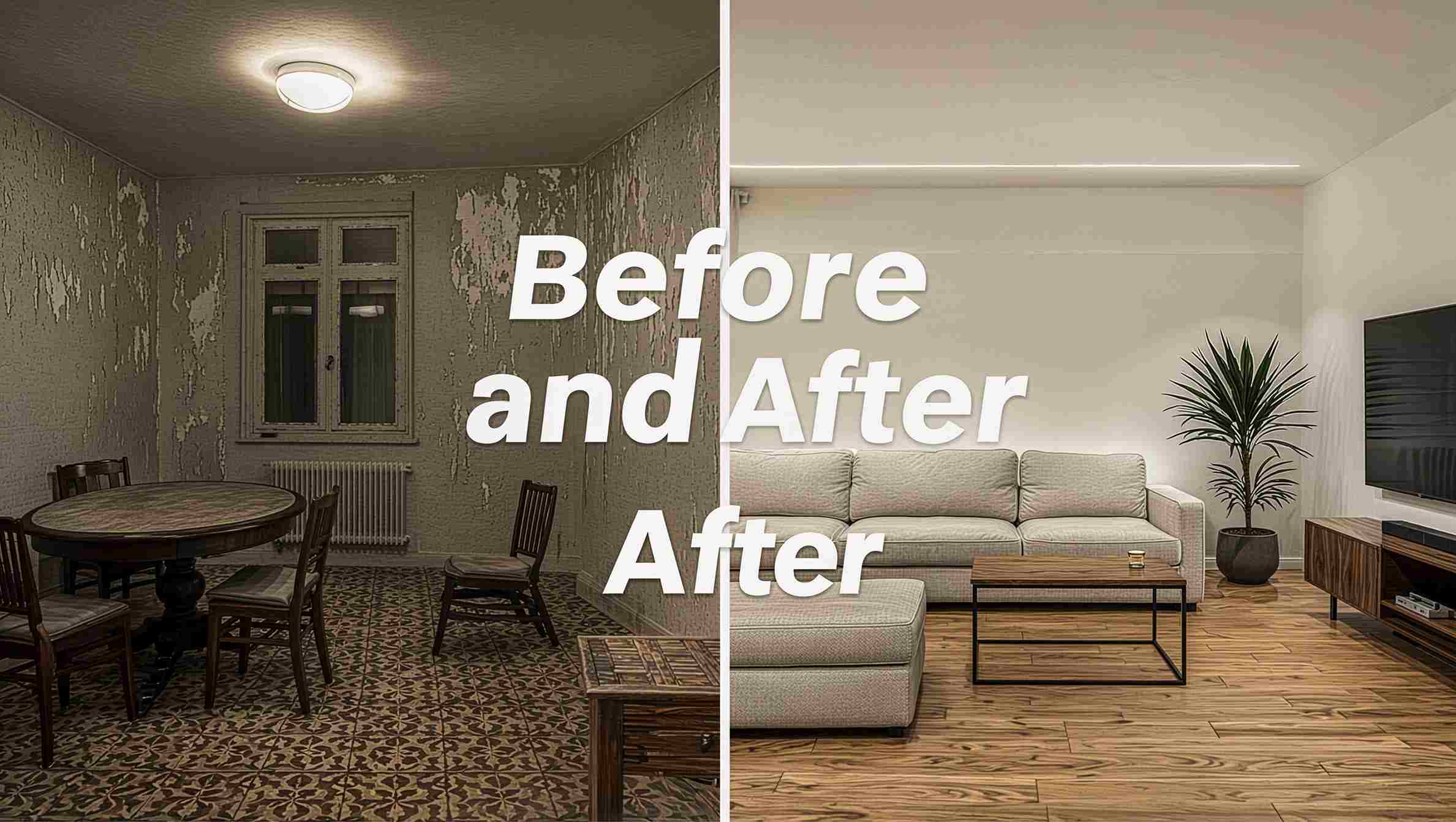
There is something almost addictive about flipping through a before and after interior design reveal. That moment when you see a cramped, cluttered room turn into a serene, beautiful space — it does something to you. It makes you look around your own home and start wondering, what if? Whether you are tired of a living room that has never quite felt right, a bedroom that feels more like a storage unit, or a kitchen that lost its charm somewhere around 2009, the truth is that transformative change is far more accessible than most people think.
Before and after interior design is not just about spending a fortune on new furniture or hiring a team of contractors to gut your space. More often than not, the most dramatic transformations come from a clear vision, a few strategic decisions, and the willingness to let go of what no longer serves the space. This guide walks you through what makes these transformations so powerful, how to approach your own makeover, and what real before-and-after stories can teach us about design, intention, and home.
If you have ever felt overwhelmed by where to even start, you are not alone. Most people freeze not because they lack taste, but because they have too many ideas pulling in different directions. By the end of this article, you will have a practical, grounded framework for approaching your own redesign — whether it is one room or your entire home.
Why Before and After Interior Design Reveals Are So Powerful
There is a psychological reason why before-and-after content resonates so deeply with people. Human brains are wired to notice contrast. When we see a dark, disorganized room side by side with a light-filled, thoughtfully styled space, the gap between the two is immediately legible — even to someone with no design training whatsoever.
But beyond the visual contrast, what these reveals communicate is possibility. The “before” image is relatable. Most of us live in spaces that look a lot like those starting points. The “after” image is aspirational, but not in a way that feels impossibly out of reach. That balance — “I can see myself here” and “I can imagine getting there” — is exactly why before and after interior design has become one of the most searched and shared topics in the home category.
There is also a storytelling element at work. Good design reveals do not just show products or paint colors. They communicate how a space feels before and after — how a formerly tight, awkward dining room now invites long dinners, or how a previously unloved spare room has become someone’s favorite retreat. The best transformations tell a human story alongside a visual one.
The Most Common Starting Points: What “Before” Really Looks Like
Before diving into how transformations happen, it helps to understand the typical starting conditions. Recognizing your own “before” clearly is the first step toward defining your “after.”
The Cluttered, Directionless Room
This is perhaps the most common starting point. The room has accumulated years of mismatched furniture, impulse purchases, and items that never had a true home. There is no clear focal point, no cohesive color story, and the layout tends to be reactive rather than intentional. People often describe this type of room as feeling “busy” or “chaotic” even when it is technically clean.
The fix here is less about buying new things and more about editing ruthlessly. Most of these rooms are actually overfurnished. When you remove two or three pieces of furniture and reposition what remains around a single focal point — a fireplace, a window, an accent wall — the room often transforms dramatically without any new purchases at all.
The Outdated but Solid Room
This space has good bones — solid architecture, decent proportions, maybe even some original features worth preserving — but it has not been touched since a previous decade made its design choices. Think brass hardware from the nineties, carpet that has seen better days, or a wood-paneled feature wall that feels more basement rec room than intentional design.
Rooms like this are actually among the easiest to transform, because the structure is sound. Replacing hardware, painting over dated finishes, swapping textiles, and updating lighting can take this type of space from forgettable to genuinely beautiful in a weekend.
The Functional but Soulless Room
These spaces work fine. They have adequate seating, sufficient storage, and adequate lighting. But they feel sterile — like a hotel room, or a model home display. There is no warmth, no personality, no sign that a real person with real interests lives here.
This is where styling and layering become essential. Bookshelves styled with a mix of books, objects, and plants. A gallery wall with personal photographs mixed alongside prints. A throw blanket draped over the arm of a sofa. Texture and warmth do not come from expensive furniture — they come from the accumulation of considered details.
The Design Principles Behind Every Successful Transformation
Across hundreds of documented before and after interior design projects, certain principles appear again and again. These are not rules that must be followed rigidly, but patterns that consistently separate transformations that feel genuinely successful from those that look good in photos but feel off in person.
Anchor the Room with a Clear Focal Point
Every well-designed room draws your eye somewhere specific the moment you walk in. This might be a fireplace, an oversized piece of art, a statement headboard, or a dramatic window treatment. If your room currently lacks a focal point, creating one is often the single highest-impact decision you can make.
In before-and-after transformations, this shift is often visible even in thumbnail-sized images. The “before” shows a room where the eye wanders without direction. The “after” shows a room with a clear visual anchor, and everything else in the space is arranged to complement and support it.
Choose a Color Story and Commit to It
Color is the single most emotionally powerful element in any room, and it is also where most design mistakes originate. The problem is rarely that someone chose the wrong color. The problem is usually that they failed to commit to a color story — using too many unrelated hues without intentional contrast or harmony.
Successful transformations almost always involve a tighter color palette than what was there before. Typically three to five colors: a dominant neutral, one or two secondary tones, and an accent. This does not mean bland. Some of the most striking before-and-after transformations involve bold, saturated color. But the commitment and follow-through — carrying the palette across walls, textiles, accessories, and finishes — is what makes it work.
Fix the Lighting Before Anything Else
Lighting is the invisible hand that shapes how every other element in a room is perceived. It is also the element most consistently ignored in home design. A beautifully furnished room with poor lighting will always look worse than a simply furnished room with excellent light.
In practical terms, this means removing single overhead fixtures in favor of layered lighting: ambient light from multiple sources, task lighting where work happens, and accent lighting to highlight architectural features or artwork. Adding dimmers is the single highest-return investment in any room refresh.
Before-and-after reveals that include lighting changes often show results that look like magic. The furniture has not changed, the paint is the same, but the room feels entirely different — warmer, more dimensional, more alive.
Scale and Proportion Are Non-Negotiable
One of the most reliable causes of a room that “doesn’t feel right” is furniture scaled incorrectly for the space. A sofa that is too small for the room feels apologetic and lost. A dining table that is too large makes the space feel claustrophobic. Rugs are almost universally purchased too small — the single most common design mistake in residential interiors.
When reviewing before-and-after interior design projects with professional designers, this is often the first thing they address. Swapping an undersized rug for one that actually grounds the seating area, or replacing a loveseat with a full-sized sofa, can change the perceived size of a room dramatically — sometimes making a small room feel larger, paradoxically, because properly scaled furniture reads as confident and deliberate rather than uncertain.
Room-by-Room: Real Transformation Lessons
Living Room Before and After
Living rooms carry the most weight of any space in a home. They need to be comfortable for daily life, presentable for guests, and expressive of the people who live there. When they fail, it tends to be across multiple fronts simultaneously.
The most successful living room transformations share a few characteristics. First, they establish a clear seating arrangement that promotes conversation rather than television-watching by default. Second, they introduce a rug large enough to unite the seating group. Third, they layer lighting so that the room can feel different at different times of day and for different purposes.
One of the most dramatic shifts in any living room before and after interior design project involves removing excess furniture. Most living rooms are overfurnished by at least one piece. When that piece is removed — a second sofa that was really just storage, a coffee table that was too large, a side chair that blocked the natural traffic flow — the room immediately exhales.
Bedroom Transformations
The bedroom is the most personal room in any home, and yet it is often the room that receives the least design attention. Many people treat it primarily as a place to sleep, which means it becomes a catch-all for everything that does not have a home elsewhere.
The before-and-after bedroom transformations that are most effective begin with the same principle: centering the bed on the dominant wall and treating it as the absolute focal point of the room. A properly centered bed with a statement headboard — even an inexpensive fabric one — immediately gives the room a sense of intention.
After the bed placement, lighting and textiles do the heavy lifting. Bedside table lamps rather than overhead lighting, quality bedding layered with texture and dimension, window treatments that add height by mounting close to the ceiling — these details transform a bedroom from a place you sleep to a place you genuinely want to spend time.
Show Image
Kitchen and Dining Updates
Full kitchen renovations are expensive and disruptive. But many “before” kitchens are not structurally bad — they are just visually dated. Cabinet hardware, paint color, lighting, and open shelving styling can transform the feel of a kitchen entirely without touching a single cabinet box or countertop.
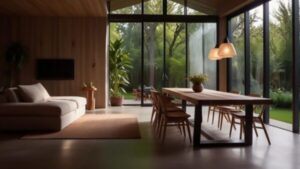
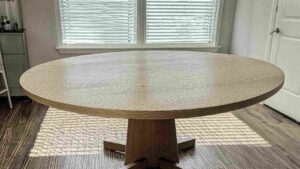
The dining room is similarly responsive to targeted changes. A table refinished or replaced, chairs recovered or swapped, a statement light fixture installed overhead, a rug added beneath the table — these changes can take a space from purely functional to genuinely inviting.
Budget Transformations: High Impact, Low Cost
Not every before and after interior design makeover requires a significant budget. Some of the most dramatic transformations are achieved with investments under a few hundred dollars, using creativity and clear vision rather than purchasing power.
Paint remains the highest-return investment in interior design. A single weekend and a few cans of paint can alter the mood of a room completely. Painting walls, furniture, and even tile (with the appropriate primers and paints) are all legitimate tools in a budget transformation.
Secondhand furniture sourcing has become dramatically more accessible in the past decade. Platforms connecting buyers and sellers of used furniture have made it possible to furnish an entire room with quality pieces for a fraction of the retail cost. The key is patience and a clear vision — knowing what you are looking for before you start searching.
Swapping out lighting fixtures is consistently underestimated as a transformation tool. A standard ceiling fixture replaced with a statement pendant or chandelier, even an affordable one, changes the character of a room significantly. The same ceiling with different lighting reads as an entirely different space.
Common Mistakes That Undermine Transformations
Even well-intentioned redesigns can fall flat if certain common mistakes go unaddressed. Understanding these pitfalls in advance can save significant time, money, and frustration.
Decorating before decluttering. Adding new items to an already crowded space compounds the problem rather than solving it. Decluttering must come first — always.
Choosing paint colors from swatches alone. Paint colors look dramatically different under different lighting conditions and against different surfaces. Always test samples on the actual wall before committing to full application.
Buying furniture before measuring. This seems obvious, but it is one of the most common and costly mistakes in home design. Measure the room, measure the doorways, measure the space where the piece will live — all before purchasing anything.
Ignoring the ceiling. Ceilings are often called the “fifth wall,” and treating them as an afterthought leaves significant design opportunity on the table. A ceiling painted a contrasting color, treated with wallpaper, or simply painted a warmer white than the walls can add tremendous character to a room.
How to Plan Your Own Before and After Interior Design Project
Planning a successful redesign requires a clear process. The following framework is drawn from the approaches used consistently by professional interior designers and experienced renovators.
Step one: Document the before thoroughly. Photograph every angle of the room. Note what is not working — in writing. Identify what you actually like about the space, because most rooms have at least something worth preserving.
Step two: Define your goals. Is this room primarily for relaxation, work, entertaining, or a combination? What mood do you want it to convey? What does it need to do differently from how it functions now?
Step three: Research with intention. Gather images that represent the feeling you are after. Notice patterns in what you are drawn to — color, light quality, furniture style, level of formality or casualness. These patterns will guide your decisions.
Step four: Establish a budget and prioritize ruthlessly. Decide what one or two changes would have the highest impact and put your resources there first. A beautiful sofa in a poorly lit room will be less effective than an average sofa in well-lit one.
Step five: Execute in the right order. Paint before furnishing. Address structural or lighting issues before styling. Make the big decisions before the small ones.
Frequently Asked Questions
What does before and after interior design actually mean?
Before and after interior design refers to documenting a space in its original condition, completing a redesign process, and then photographing or presenting the finished result alongside the starting point. These reveals showcase the transformation and provide both inspiration and practical guidance for others looking to redesign their own spaces.
How long does a typical interior design transformation take?
The timeline varies enormously depending on the scope of the project. A single room refresh involving paint, new textiles, and restyling can be completed in a weekend. A full room renovation involving structural changes, new flooring, and custom furniture can take several months from planning to completion.
Do I need to hire a professional designer for a successful before and after transformation?
Not necessarily. Many highly effective transformations are completed by homeowners working independently, armed with a clear vision, thoughtful research, and patience. However, working with a professional designer — even for a single consultation — can help identify issues that are not immediately obvious and prevent costly mistakes.
What is the most impactful single change in a room transformation?
Lighting is consistently identified by professional designers as the most impactful single change available in any room. Replacing or augmenting existing lighting with a layered approach dramatically changes the mood and livability of a space, often more than any other intervention.
How do I know what style I actually want?
Collect images of rooms you genuinely like — not rooms you think you should like — from multiple sources over several weeks. Patterns will emerge in the colors, textures, furniture styles, and levels of formality or informality that appear repeatedly. Those patterns represent your actual aesthetic preferences.
Can a small room really look dramatically different after a redesign?
Absolutely. In many cases, small rooms show the most dramatic transformation results because the principles of scale, proportion, and light have such a concentrated effect in a compact space. Strategic use of color, properly scaled furniture, and mirrored or reflective surfaces can make a small room feel significantly larger and more functional.
What is the biggest mistake people make when trying to redesign a room?
The most consistently identified mistake is attempting to decorate a room without first addressing function, decluttering, and layout. Styling a poorly arranged, overcrowded room produces mediocre results regardless of the quality of individual pieces. Layout and editing must come before decoration.
How important is the rug in a room transformation?
Extremely important. The rug is often described as the foundation of a room’s design — it grounds the furniture grouping, defines the space, and introduces color and texture in a single element. Choosing a rug that is too small is one of the most common mistakes in interior design and one of the easiest to correct.
Should I match my furniture, or mix styles?
Matching everything too precisely makes a room feel like a showroom rather than a home. The most livable, visually interesting rooms mix styles, periods, and materials with intentionality — pairing contemporary pieces with vintage finds, combining smooth surfaces with textured ones. The key is maintaining a consistent color story and level of visual weight so that disparate pieces feel like they belong together.
How do I maintain a transformed space over time?
The most effective way to maintain a redesigned space is to establish clear homes for all objects and commit to returning things to those homes consistently. Design is not a one-time event — it is an ongoing practice of editing, adjusting, and making considered decisions about what belongs in the space and what does not.
Conclusion
The before and after interior design transformation, at its core, is not really about furniture or paint or light fixtures. It is about intention. It is about deciding that a space deserves to be considered carefully — to be planned and executed with purpose rather than assembled by default and neglect over time.
Every great transformation started as a “before.” Every cluttered, dim, directionless room that has since become someone’s favorite place in their home was once exactly the kind of space most people scroll past without a second thought. What changed it was not money, or talent, or magic. It was a decision to look at it honestly, understand what it needed, and follow through on a vision.
Your own before is waiting. And with the right principles, the patience to execute in the right order, and the willingness to edit ruthlessly, the after is far closer than you think.